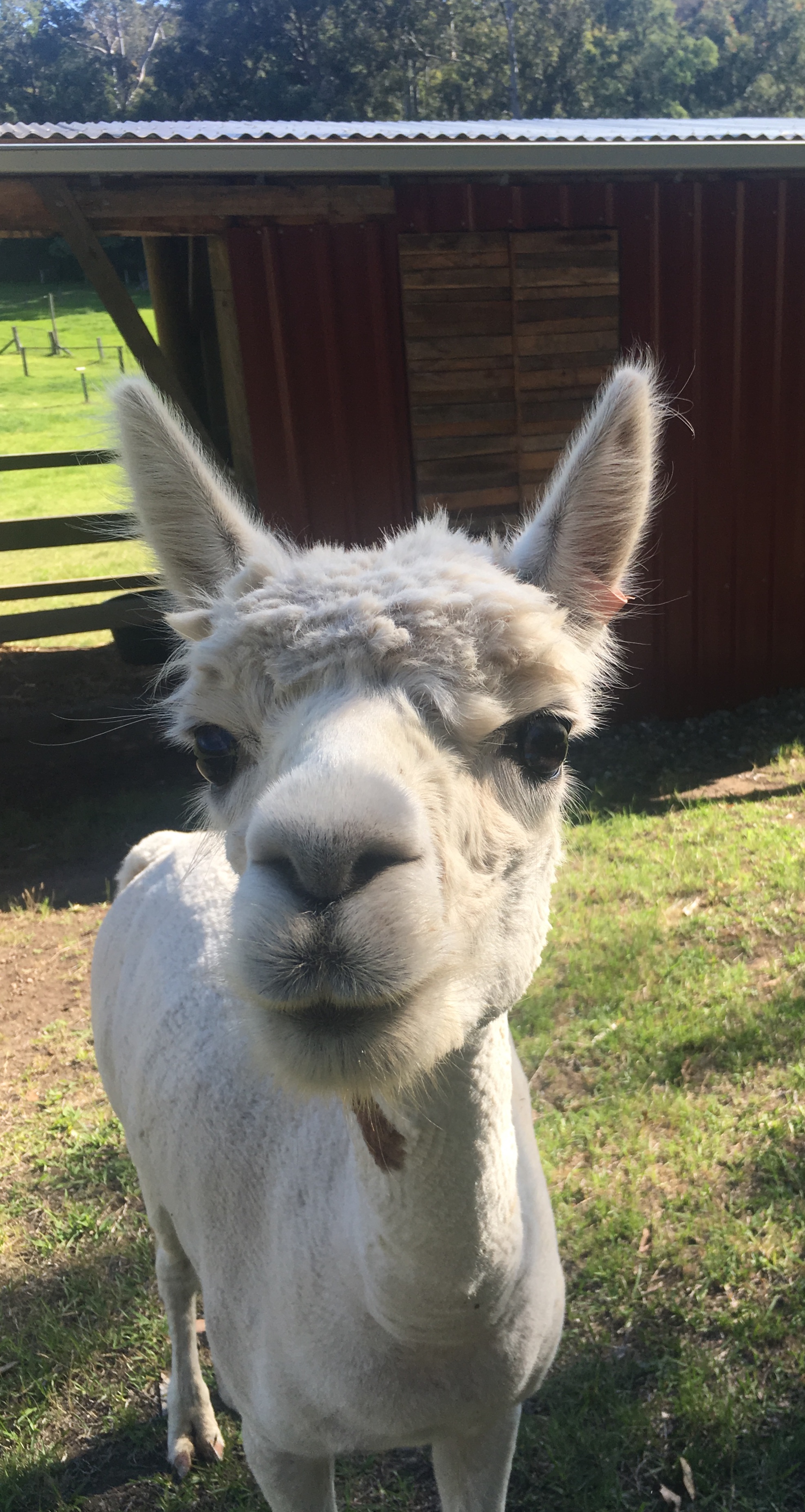
Alpacas on the Old Wheat Paddock

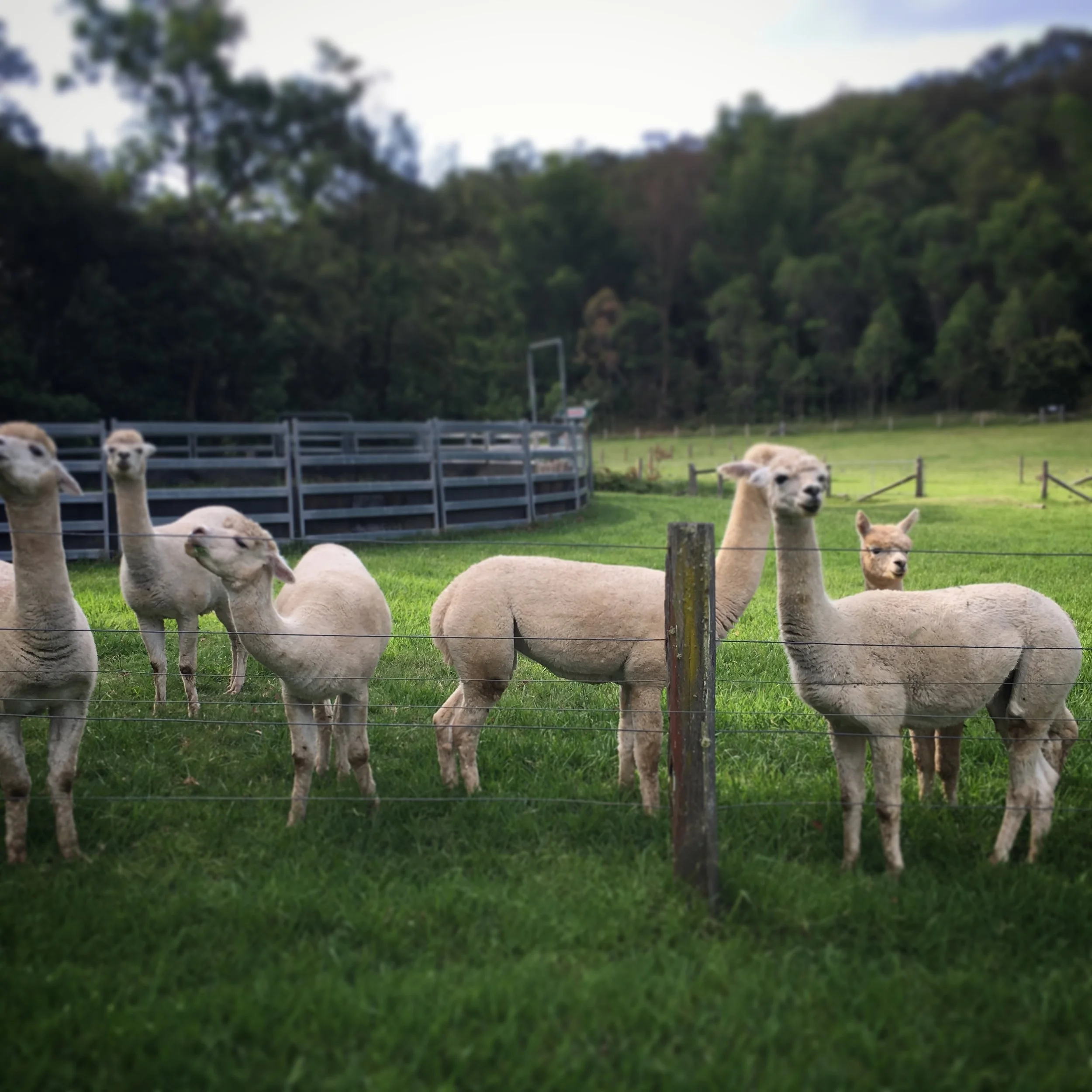
Taking some of our alpacas for a stroll past Platypus Walk and into the Old Wheat Paddock on this hot summer afternoon.

Its always fun having the alpacas follow me around the farm. Highly recommended and alpacas love a new paddock every couple of weeks. Paddock rotation is extremely important for us and for the health of our herd. Find out why, when you book into on our on-farm workshops.

If you are looking at starting your own herd, why not book in for one of our alpaca training workshops and we will show you how we manage of herd of huacaya and suri alpacas.

See more on our website.

Its called Alpaca 'Gold'

The alpaca is a ruminent with three stomachs. It converts grass and hay to energy very quickly, eating far less (as a percentage of its body weight) than other farm animals. Alpaca manure is lower in organic matter content than the manure from most other barnyard livestock (cows, horses, goats and sheep) but still has enough to improve soil texture and water-holding capacity. This lower organic content allows alpaca manure to be spread directly onto plants without burning them. It is the decomposition of organic matter content of the manure that indicates their efficient digestion system.

IMG_1515.JPG

The nitrogen and potassium content of alpaca dung is comparatively high, an indication of good fertilizer value. Nitrogen, phosphorus and potassium are the major plant nutrients. Phosphorus is relatively low as in most livestock manure. The calcium and magnesium content is about average. South American Indians use the alpaca waste for fuel, and local gardeners find the alpaca's rich fertilizer perfect for growing fruits and vegetables. A herd of alpacas consolidates its waste in one or two spots in the paddocks, thereby controlling the spread of parasites and making it easier to collect and use on our garden beds. 

Photo credit to Richard of Incamon Alpaca Stud.

Types of Alpaca's

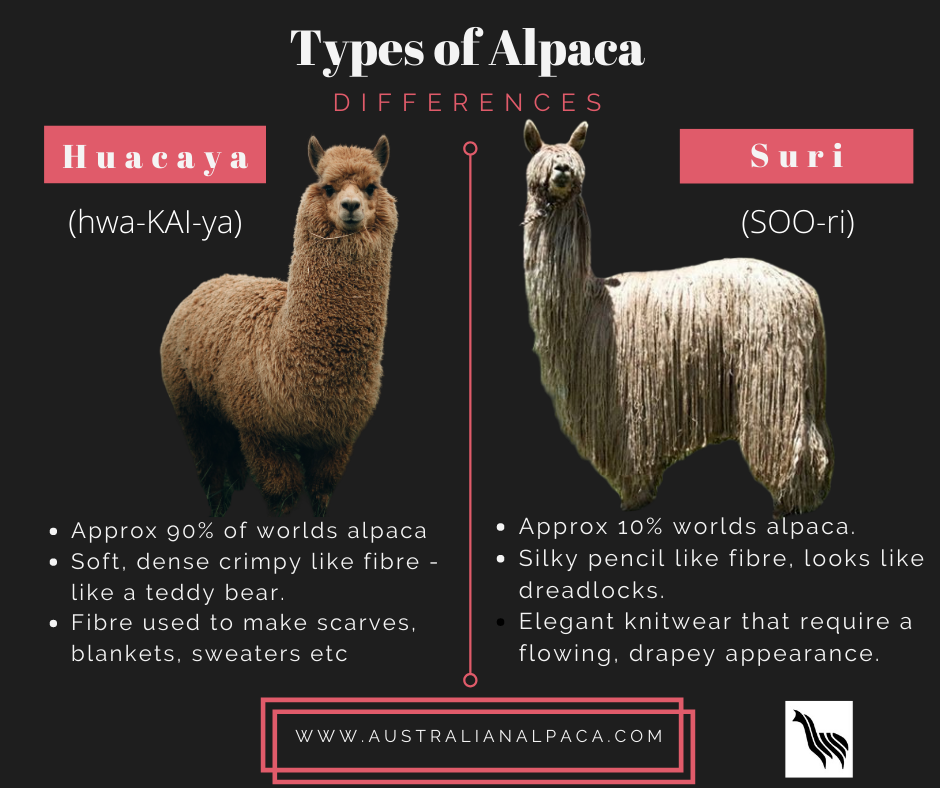
Our most common question is what is the difference between a Huacaya and a Suri alpaca. Our favourite shop, The Australian Alpaca Barn states it perfectly below.

At Little Valley Farm we have both types of Alpacas and we adore working with both. We are now venturing in the world of coloured alpacas in the next couple of months - and we are super excited!

We currently have super soft handspun alpaca yarn for sale and also raw (unprocessed) fleece for sale. Click here to purchase online.

Photo credit The Alpaca Barn. Check them out in the Hunter Valley, Blue Mountains and Sydney Rocks area.

Photo credit The Alpaca Barn. Check them out in the Hunter Valley, Blue Mountains and Sydney Rocks area.

Alpaca fleece for sale

Our valley has been surrounded by fires recently and we had to cancel our open day.

We have huacaya and suri raw fleece available for sale. Prices start from $20 per saddle and perfect for felting, spinning or using as cushion or toy in-fills. PM for more info. Pick up Laguna.

#alpacafarm #alpacafleece #littlevalleyfarm #lagunansw #wollombi #huntervalley #alpacalove #fleece

Copy of Couples weekend farmstay.png

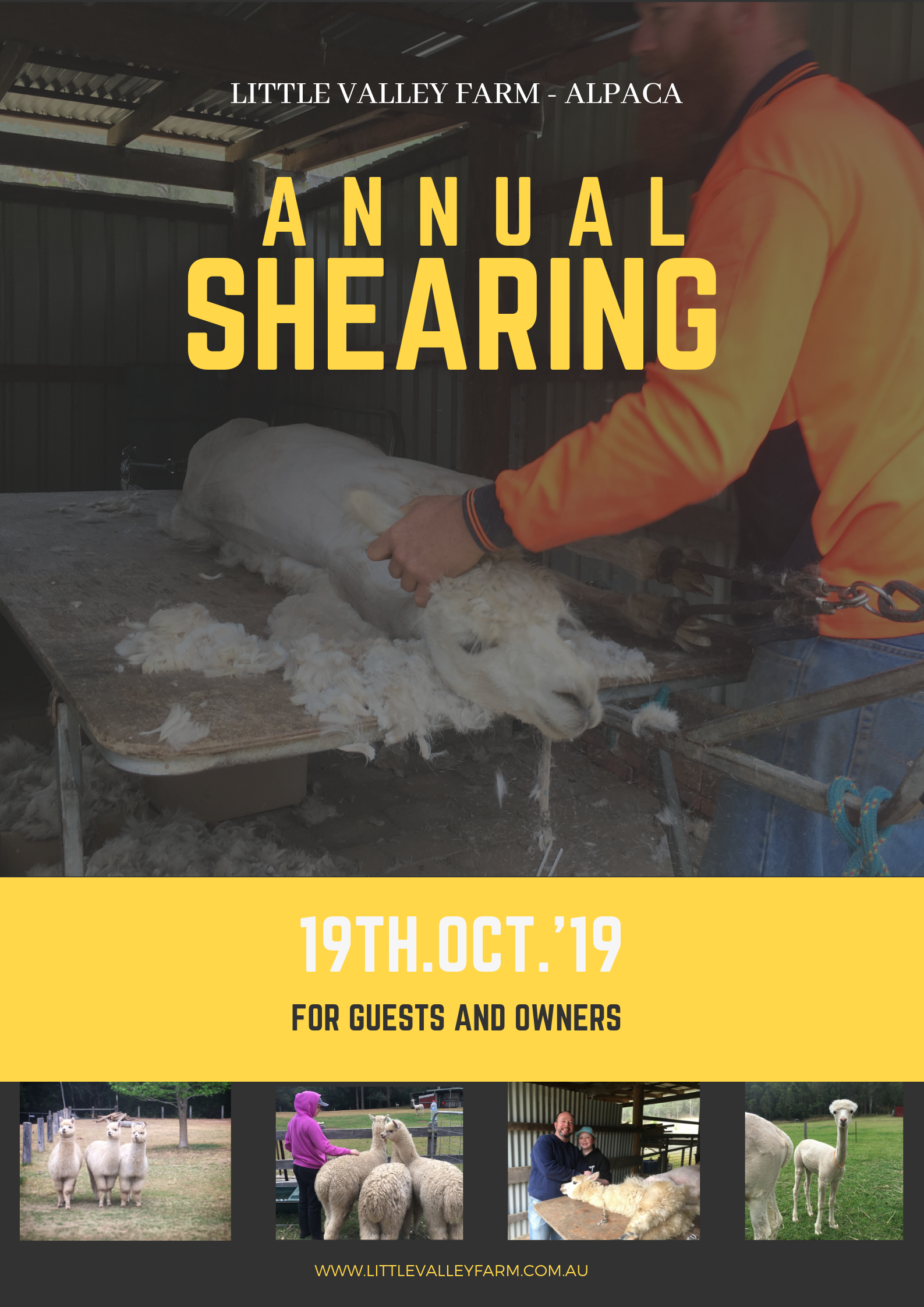
Shearing Day 2019 for alpaca owners in the valley

We have confirmed our shearing day of 19th October, 2019 with Drew Shearman.

If you would like your alpacas sheared on this day please ensure the following;

  1. Visit Drew’s website and book in your date. He will be coming to Laguna-Cessnock area on 19th October so if you are on this route, please contact him now before his time slots book out. https://www.shearmanlivestock.com.au

  2. Confirm costs with Drew including any additional services such as your annual 5:1 vaccinations, worming and nail trimming.

  3. Have a small alpaca enclosure ready. Ensure Drew is not chasing the alpacas on the day. This will result in additional cost (and stress) to you, the alpacas and will also delay Drew in his back to back farm visits. So be prepared!

  4. Ensure you have cash to pay Drew on the day. He can always invoice you later.

  5. Once the alpacas have been shorn, keep them out of the hot sun for a couple of days to avoid sun burn.

  6. Keep your fleece, use the saddle for felting, spinning or making cushion infills. Use the scrappy leg fleece as garden mulch.

  7. Rain or hail we shear so make sure you have some decent undercover for Drew and his equipment.

2019.png

Hello little ones!

May is a busy time for us with lots of cria’s unpacking plus our alpaca open day. A big welcome to Roscoe-Lilly and Boey born this month. The weather has been perfect and when winter eventually comes around we have our little coats on and plenty of alpaca shelters.

Lilly and Roscoe on the right and Zoey and Boey on the left.

Don’t forget we currently have some wethers for sale as pairs so contact us for more info.

IMAGE.JPG

Sunday afternoon on the Alpaca farm. For buyers and lovers

Afternoon-on-the-farm is a great way to learn about alpacas for anyone who is interested including those with small acreage and those just who are just dreaming of having a couple of alpacas as pets or lawnmowers.

You will get to know them, feed them and enjoy food and drinks in the park like surrounds of Little Valley Farm.

It will be a great way to learn about;

* alpaca health,

* best shed layouts for shearing and small pens,

* appropriate shade,

* best feed, grass and paddocks,

* nail trimming, grooming, shearing and vaccinations

*alpaca fleece, spinning and knitting.

Get some hands-on experience and ask any questions you have about these amazing creatures.


This day is suitable for people wanting to buy or even just dreaming to own alpaca’s.  Little Valley Farm is a registered breeder with the Australian Alpaca Association.


Cost: $20+gst per person. 

Sunday: 26th May, 2019

Please do not bring your dogs to our farm.

Wood-fired pizza snacks and drinks on the train deck in the afternoon.

Buy tickets through Eventbrite (link) and email us at danielariccio@hotmail.com to let us know your coming. 


Times are 12:30pm to 3pm.

Location: Laguna, Hunter Valley, you will be emailed a map.

RSVP: A must as limited places available.

Payment: Info below. Ticket price + gst & booking fee.

IMG_6923.JPG

Buy your tickets here before 23rd May, 2019.

10 Things You Didn’t Know About Alpacas

We do know Alpacas are definitely cute and people love meeting them. Here are ten things you did not know about alpacas: 

1) There are only two breeds, the huacaya (wuh-kai-ya), which has fluffy hair (fleece) akin to a teddy bear, and the suri alpaca which has long wavy hair (fleece), that hangs off its body and kinda looks like dreadlocks. 

2) Like their cousins the llamas, alpacas spit when angry or annoyed.  Lucky for us, our alpacas are well behaved and only spit at each other when I have the food bucket.  I do have to admit, I have been caught in the spitfire a couple of times.  

3)  Alpacas are gentle on the land with their soft pads on their feet, which does not churn up the paddocks like a cow or horse’s hooves.  They do have long nails and we trim them every three months. 

4) They are known as good lawnmowers as when alpacas eat grass, they snip off the top of the plant unlike some other animals that pull the grass up by the root when eating.

5) They “cush” when seated, meaning they fold their legs under their body making them easy to transport in smaller trailers. 

6) Alpacas’ tails are used to express feelings to each other. If they’re bothered by something they will twitch it back and forth. If an animal is being submissive it will raise its tail over its body and crouch down. 

7)  Alpacas always poop in the same place. They line up to use these communal dung piles in the paddock. We then scoop it up and use in our garden beds as its known as 'alpaca gold' due to no weeds being transferred.

8) Mothers almost always have their babies in the morning. By having their babies in the morning, the cria will have the whole day to dry off, begin walking around, and nurse from its mother before the temperatures begin to drop. 

9) Females have an 11.5 month gestation period and about 90% of the time they don’t need help in the delivery of the babies.

10) Alpacas love to sunbathe.  The first time I saw them sunbathing, I freaked out as they look like they are dead. You can walk right up to them and they won't hear you in their deep sunny slumber. I wish I could sleep like that!  

Don’t forget about our 4 pax farm stay where you can enjoy a full weekend of interaction with these lovely animals. Fact 11, they love to hog the camera! See our farm stay for more details.

If you have small acreage and would love some wethers as fantastic lawnmowers, please contact us as we always have several available for sale. Training and alpaca workshops are also held at Little Valley Farm.

Breeding Alpaca's

Autumn is here and so its finally time to join our stud alpaca with our girls. We have changed our mating dates in the last couple of years due to the scorching heatwaves and to make it a more pleasant experience for our alpaca mum’s and cria’s.

We now prefer our births from March to June as the weather is cooler and we have plenty of enclosures to keep the cria and mum warm and out of the rain for the first couple of weeks. Rain, wind and the cold can kill a cria so make sure you have fully-enclosed shelters/pens that will accommodate mum, cria and a companion alpaca in the shed when the weather is not so nice.

What we do:

  1. Summer in the Hunter Valley can reach over 43+ degrees with several days in a row at this unpleasant temperature. So please ensure you have adequate shelter (deep shade) in each paddock. If its hot for you its hot for the alpacas.

  2. Make sure all your alpacas are shorn every year. We shear every October when the sun is not burning hot as we have witnessed sunburn on alpacas shorn December and January when the sun is at it hottest.

  3. Ensure your alpacas have deep shade as well as a large shed as a backup. They do prefer to sit under tree’s but will definitely use the shed when hail or heavy rain appears.

  4. Make sure all your water troughs are placed in a shaded area and not sitting out under the sun. Change the water daily to keep it fresh and cool and use an auto-filler trough. Some days we place ice cubes / bags / bottles inside the trough to keep it chilled.

  5. Shower the alpacas under their bellies on hot days and wet their legs where their sweat glands are. Give them the dam but please ensure they do not get their long skinny legs stuck in the mud and drown.

  6. Summer time is tick time and your young alpacas are more susceptible to ticks. We have found the older alpacas seem to fight it off. So make sure you shear October when the ticks are out and check them all the way until Autumn. Its easier to find a tick on an alpaca once they have been shorn. We have guinea fowl that roam the paddocks looking for ticks also.

  7. For cria’s born in the wind and rain make sure you have a alpaca jacket (dog jacket) for them to wear. Keep the jacket dry at all times and depending on the weather place the jacket on late afternoon and then secure in a fully enclosed pen with mum. Remove jacket early morning.

  8. Make sure your trim your alpaca’s nails every three months. Don't let them get to long and out of shape as they will never be comfortable, look good or be easy to trim again. So trim regularly and it will make the whole process a whole lot easier for you. Hint also trim after the rain as the nails are lovely and soft to cut.

  9. Lucern hay for mum and cria in the pens and some hay for cria to sit on and keep itself warm.

cria in jacket.JPG

Photoshoot at Little Valley Farm

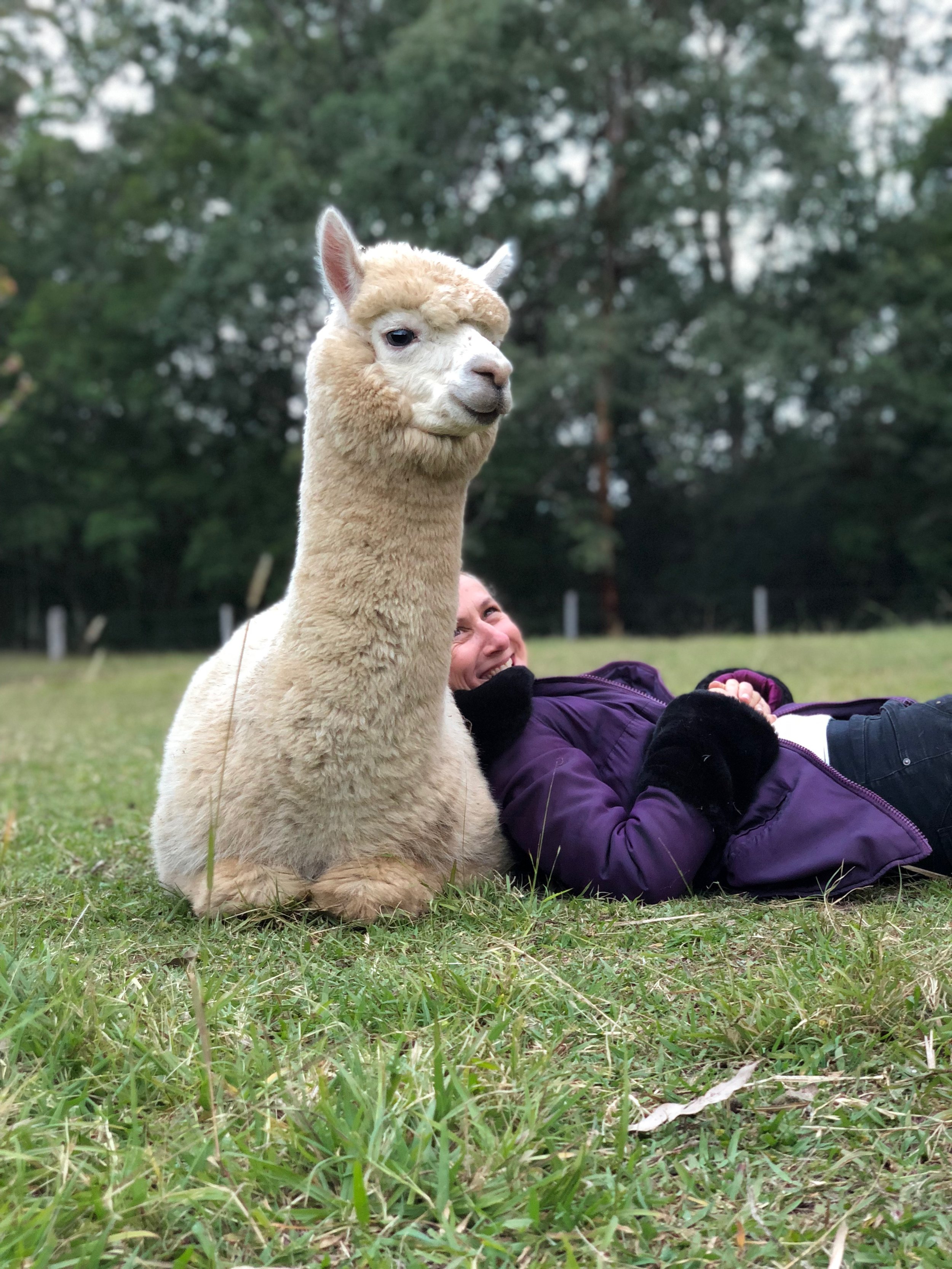
Yesterday we had the most magical photo shoot at Little Valley Farm. Neve, the friendly Laguna Alpaca did not disappoint. Soon as she met the kids, she gently ate from their hands and then plonked herself right in between the kids and posed for the camera.

Neve, the friendly Laguna alpaca is amazing with her desire to be with people. She picks her people and will happily sit with them for hours in the paddock. The look of disappointment when we get up to leave is hysterical and yesterday she just wanted to sit with the kids under the huge liquid amber tree and just smile away. There are times and its always on her terms, that when she is done, she simply gets up and walks away but she really loves hanging out with people.

Before we introduce Neve and the other alpacas whom are mostly pregnant and a couple of cheeky weathers. Our working stud is in another paddock watching over us. Our advise to people when meeting our alpacas for the first time is to walk slowly to the alpacas, no loud talking and try and whisper, don't try and pat them on their head but when they are ready gently stroke their necks. Moving slowly and quietly the alpacas feel calm and relaxed and will come up to you. One thing for sure is that we keep the working stud (entire male) away from the alpaca herd and especially when we have guests over.

Alpacas are inquisitive and gentle creatures but will occasional spit when food is present. They really don’t have the the desire to spit at you but you could always be standing in the line of fire! Maybe our Little Valley Farm alpacas are just well behaved, beautifully treated and know that they are very much loved.

IMG_4227.JPG
IMG_4214.JPG

Little Valley Farm is a member of the Australian Alpaca Association and sells registers and unregistered alpacas. We sell wethers as guards, alpacas as pets and or breeding females. Our alpacas are shorn every October and are regularly groomed - nails trimmed, teeth check, fleece check, vaccinated and wormed.

If you are a small farm owner and are looking for alpacas, simply let us know what you are looking for and how your farm is set up ie., shelters, fencing, water and small pens so we can give you the best advise for housing alpacas.

Registered Alpaca Breeder in Wollombi Valley

Little Valley Farm is a member of the Australian Alpaca Association. That mean’s we have a registry of our alpaca’s and their birth lines. It also means for new alpaca owners, when you purchase an alpaca from us, you know what you will get - a happy, healthy, friendly alpaca.

Little Valley Farm also runs alpaca working shops and training days. Follow our facebook page for our 2019 event listings.

Alpaca fleece buyers day happens Nov - Dec - Jan every year where you get to purchase our beautiful fleece in white, fawn and chocolate brown.

aaa sign .png

Alpacas coming up for sale

A couple of times a year, we release several of our alpacas for sale. The best time to purchase alpacas is after shearing so you can see what’s underneath their beautiful fleece. 

This month, we will be releasing a couple of wethers. They are 3 to 5 years old. They are great mates and should be kept together. Remember alpacas are herd animals and need to be kept with other alpacas, not other livestock.

Wethers are known for their lovely soft fleece and also good guarding nature.  Please note, they can challenge a fox or kill a small domestic dog but they can not fight off a wild dog or a pack of wild dogs.  

Alpaca's need to be shorn every year and we shear every October.  We can give you a rundown on their annual vaccinations, worming, drenching, teeth and nail trimmings.  

Little Valley Farm runs training days a couple of times a year so let us know if that is something that you need to do. We can also give you advice on the best shelters and pens to house alpacas. 

To find out more about our alpaca's send us an email. 

Alpacas start from $550++ depending on age, sex and fleece quality. 


Loves to be hand fed, will follow you around the farm with a bucket of food, inquisitive and lovely natured.

Get your PIC ready before purchasing livestock

Ready more on our blog to find how we use the alpaca fleece.